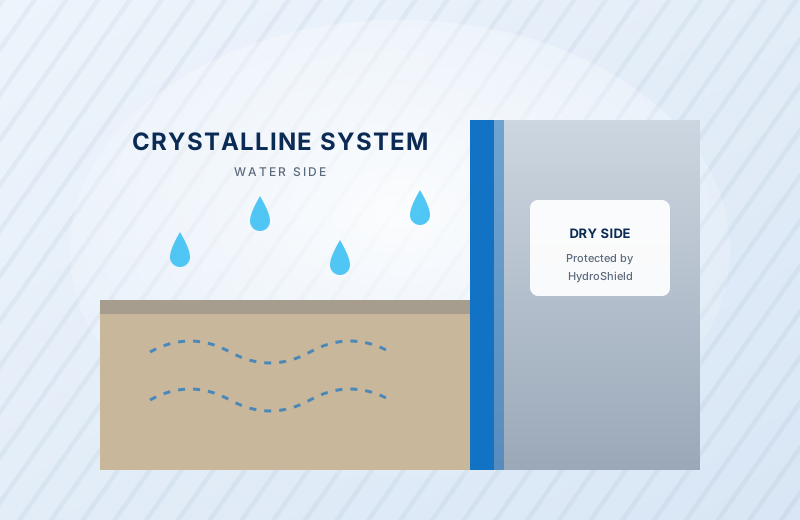
Crystalline waterproofing is different from every coating that sits on top of concrete. Its active chemicals react with moisture and free lime inside the concrete to grow insoluble crystals that block the capillary pores permanently.
Because the waterproofing barrier is inside the slab rather than on its face, it works against negative (internal) water pressure, cannot peel, and reactivates if new hairline cracking lets water in later. That makes it the correct choice for basements and tanks where applying a membrane on the outside face is impossible.
Supplied to contractors and builders, or supplied and applied by our own teams with a written warranty.
| Type | Capillary crystalline / two-component acrylic-cementitious |
|---|---|
| Water pressure resistance | Typically up to 7 bar positive, 5 bar negative head |
| Crack bridging (acrylic grade) | Up to approximately 1 mm static crack width |
| Coverage | 0.8 – 1.2 kg/m² per coat, two coats standard |
| Potable water contact | Approved grades available, confirm at order stage |
| Overcoating | Tileable and plasterable after full cure |
| Curing | Damp cure for 3 days after final coat |
Typical values for guidance. Actual figures vary by grade and manufacturer. The data sheet for the exact product supplied on your project is provided with delivery.
25 kg bags (crystalline); 20 kg + 10 litre two-component kits (acrylic-cementitious).
The sequence our teams follow, and the sequence we recommend to contractors buying the material from us.
Remove laitance and expose an open capillary pore structure by grinding, chipping or acid etching.
Cut out active cracks and construction joints to a U-groove and fill with the specified plugging mortar.
Wet the concrete to a damp surface-dry condition. The chemicals need moisture to migrate.
Brush the slurry on in two coats at right angles, the second while the first is still green.
Damp cure for 3 days, then fill the tank or flood-test the area before finishing.
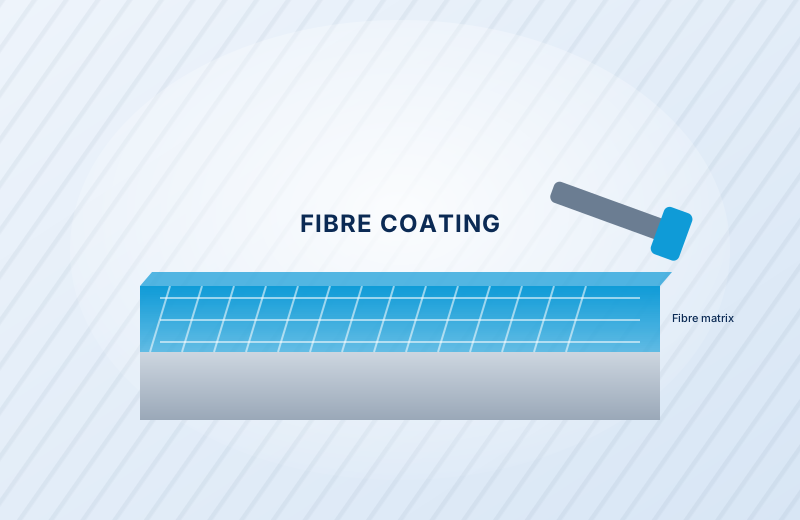
Liquid-applied acrylic elastomeric coating with fibre reinforcement for roofs, terraces, parapets and shed roofs.
View Details →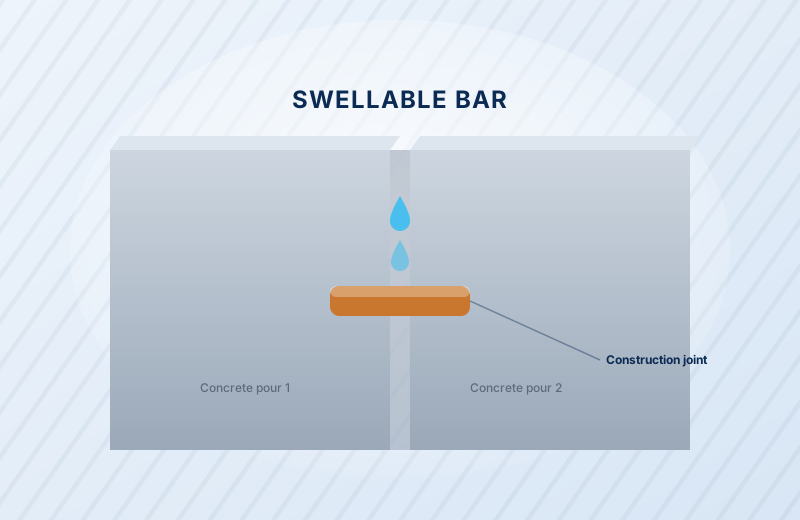
Hydrophilic rubber and bentonite swelling strips that seal cold joints, pipe penetrations and kickers against water ingress.
View Details →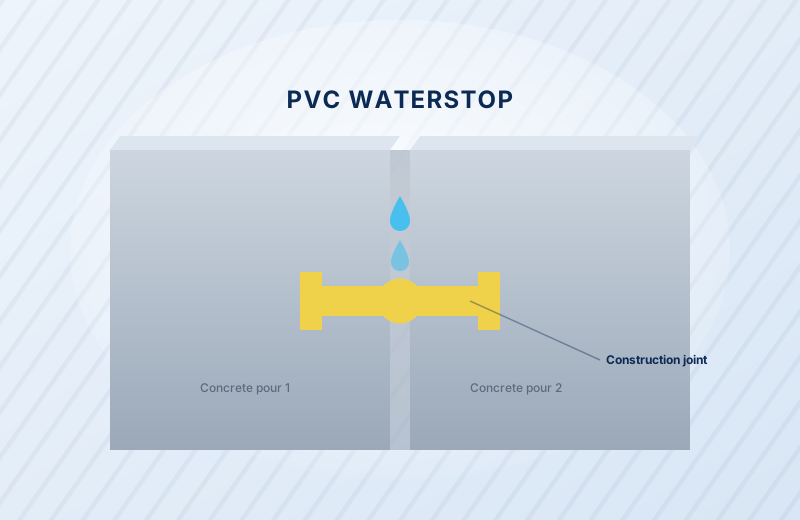
PVC and rubber waterstops with centre bulb, ribbed and dumbbell profiles for water-retaining and below-grade structures.
View Details →
Polymer-modified and micro-concrete repair mortars for spalled slabs, beams, columns and honeycombed concrete.
View Details →Tell us the area, the structure and the problem. We will recommend the right system, quote it in writing and, if you want, apply it ourselves.