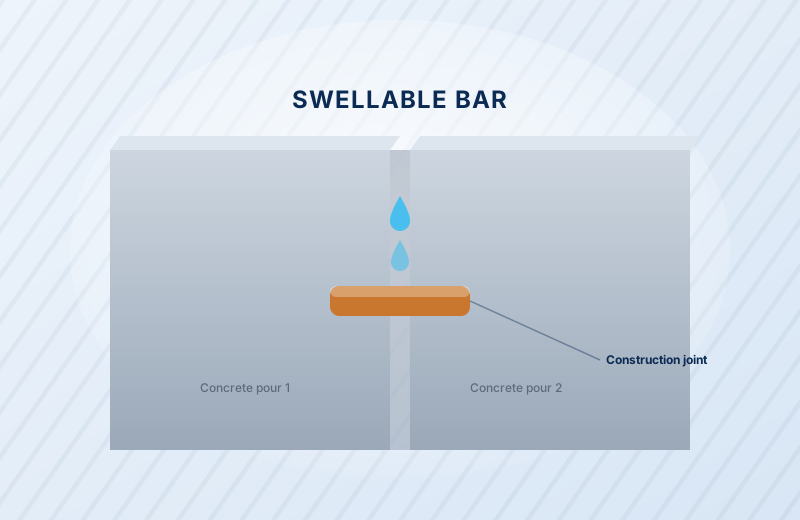
Construction joints, the line where yesterday's pour meets today's, are the most common leakage path in any basement or water tank. No matter how well the concrete is compacted, that interface is a plane of weakness.
A swellable bar is fixed along the joint before the second pour. When water eventually reaches it, the bar absorbs it and expands several times its original volume, and because it is confined by concrete on all sides it develops pressure that seals the joint tight.
Supplied to contractors and builders, or supplied and applied by our own teams with a written warranty.
| Type | Hydrophilic rubber / bentonite composite swelling strip |
|---|---|
| Typical section | 20 × 5 mm, 20 × 10 mm and 25 × 20 mm |
| Volumetric expansion | Typically 150 – 400 % depending on grade |
| Water pressure resistance | Up to about 5 bar when fully confined |
| Concrete cover required | Minimum 80 mm cover on all sides |
| Fixing | Steel nails at 250 mm centres or bonding adhesive |
| Supply | 5 m and 10 m coils |
Typical values for guidance. Actual figures vary by grade and manufacturer. The data sheet for the exact product supplied on your project is provided with delivery.
Coils of 5 m and 10 m in cartons; fixing adhesive supplied separately.
The sequence our teams follow, and the sequence we recommend to contractors buying the material from us.
Remove laitance, dust and standing water from the first pour surface.
Place the bar along the centre line of the joint with at least 80 mm concrete cover on both sides.
Nail at 250 mm centres or bed on adhesive so the bar is in continuous contact, with no gaps or bridging.
Butt bar ends tightly together. Never leave a gap and never overlap loosely.
Cast the second pour and compact thoroughly around the bar so it is fully confined.
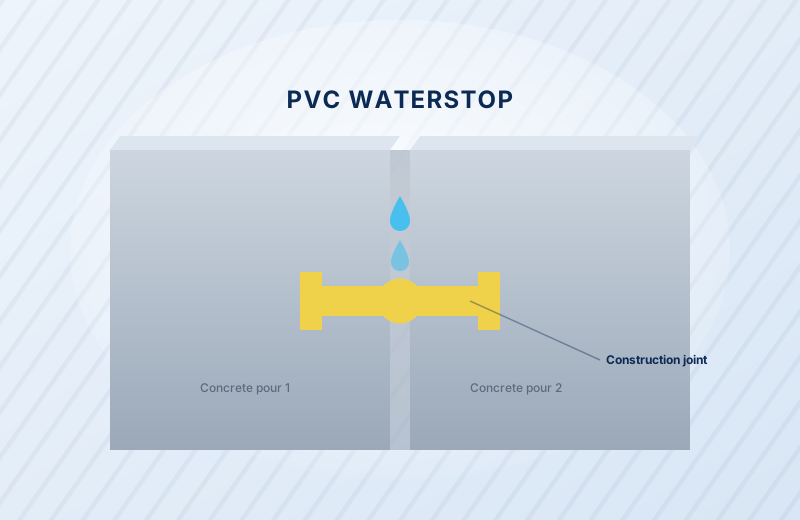
PVC and rubber waterstops with centre bulb, ribbed and dumbbell profiles for water-retaining and below-grade structures.
View Details →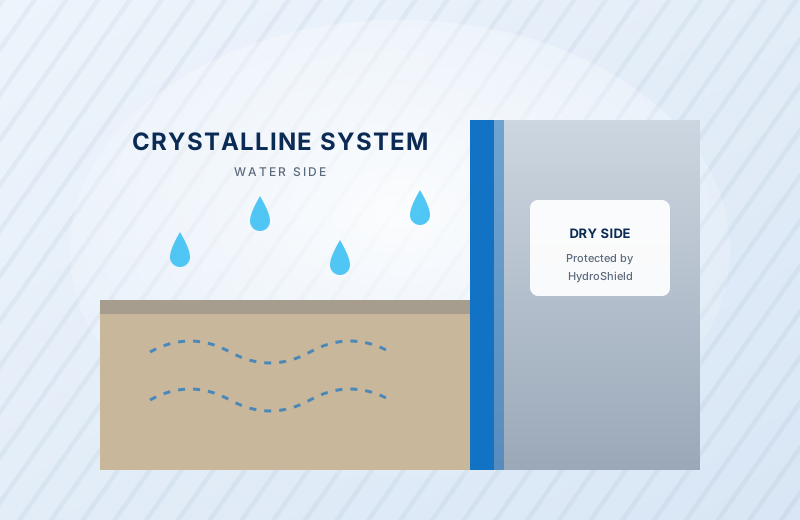
Capillary crystalline and acrylic-cementitious coatings for basements, water tanks, retaining walls and wet areas.
View Details →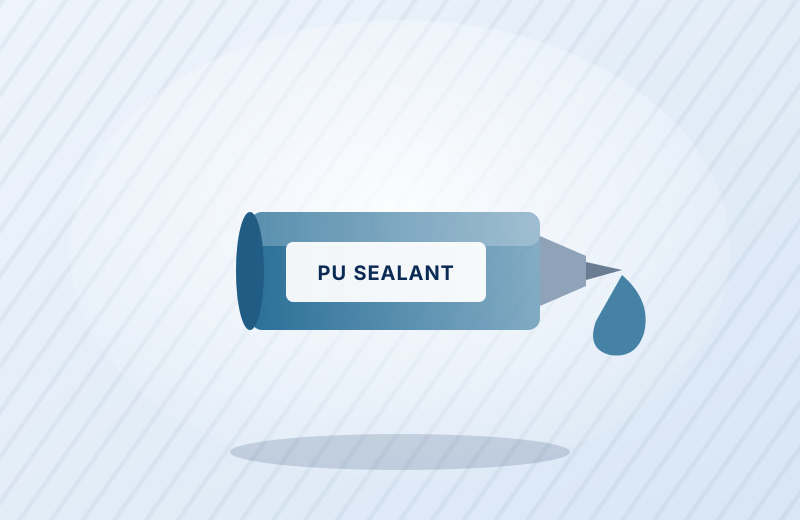
Polyurethane, silicone and polysulphide sealants for expansion joints, glazing, wet areas and structural movement gaps.
View Details →
HDPE, LDPE and PVC geomembrane liners for water ponds, canals, landfills, effluent lagoons and buried tanking.
View Details →Tell us the area, the structure and the problem. We will recommend the right system, quote it in writing and, if you want, apply it ourselves.