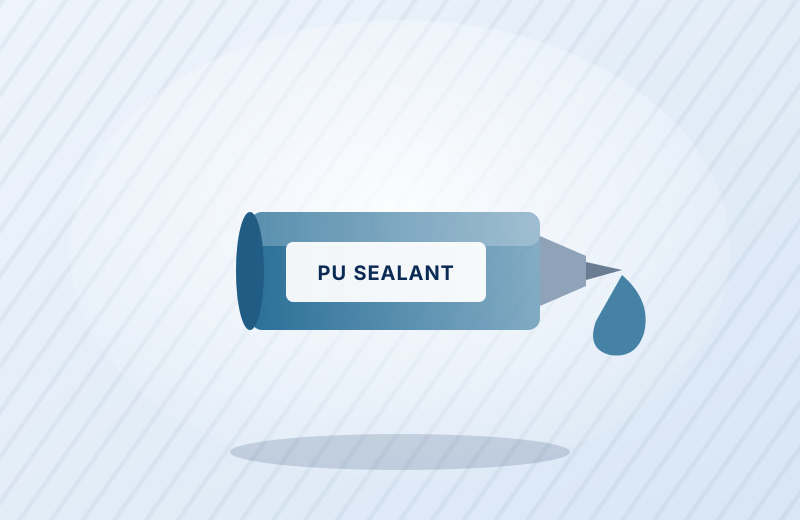
Buildings move. Concrete expands in the afternoon heat and contracts at night, and every joint designed to absorb that movement needs a sealant flexible enough to stretch and compress thousands of times without splitting or losing adhesion.
Choosing the wrong sealant, or filling a joint solid without a backer rod, is why so many joints fail within a season. We supply the right grade for each joint type and detail it correctly on site.
Supplied to contractors and builders, or supplied and applied by our own teams with a written warranty.
| Types | Polyurethane (PU), silicone, polysulphide, self-levelling PU |
|---|---|
| Movement capability | ±20 % to ±25 % of joint width |
| Shore A hardness | Typically 25 – 40 |
| Tack-free time | Approximately 1 – 3 hours at 30 °C |
| Full cure | 3 – 7 days depending on joint depth and humidity |
| Service temperature | −30 °C to +80 °C |
| Joint design | Width 6–35 mm; depth = half the width, minimum 6 mm |
Typical values for guidance. Actual figures vary by grade and manufacturer. The data sheet for the exact product supplied on your project is provided with delivery.
310 ml cartridges and 600 ml sausages; 4-litre and 20-litre packs for self-levelling grades. Backer rod and primer supplied alongside.
The sequence our teams follow, and the sequence we recommend to contractors buying the material from us.
Remove old sealant, dust, laitance and any curing compound. Joint faces must be sound and dry.
Push closed-cell backer rod to the correct depth so the sealant bonds on two faces only, never three.
Apply the recommended primer to porous joint faces and allow the correct flash-off time.
Fill from the bottom up in one continuous pass, avoiding trapped air.
Tool immediately to a slight concave profile to force contact with both joint faces, then remove masking tape.
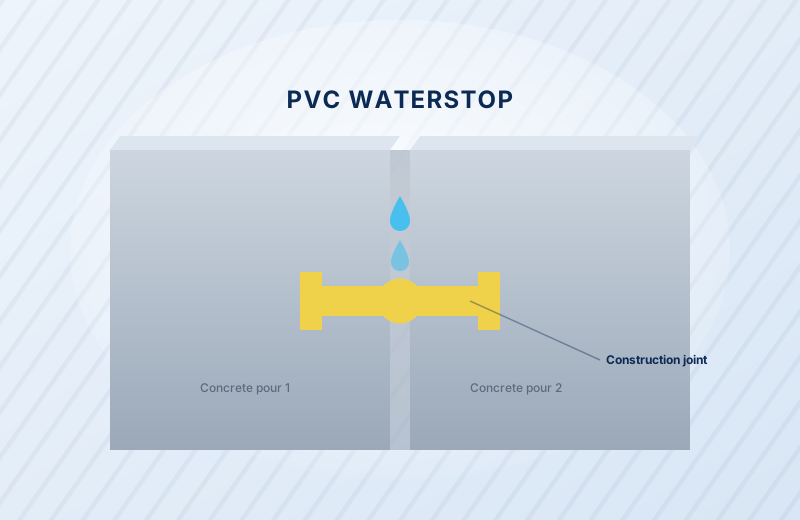
PVC and rubber waterstops with centre bulb, ribbed and dumbbell profiles for water-retaining and below-grade structures.
View Details →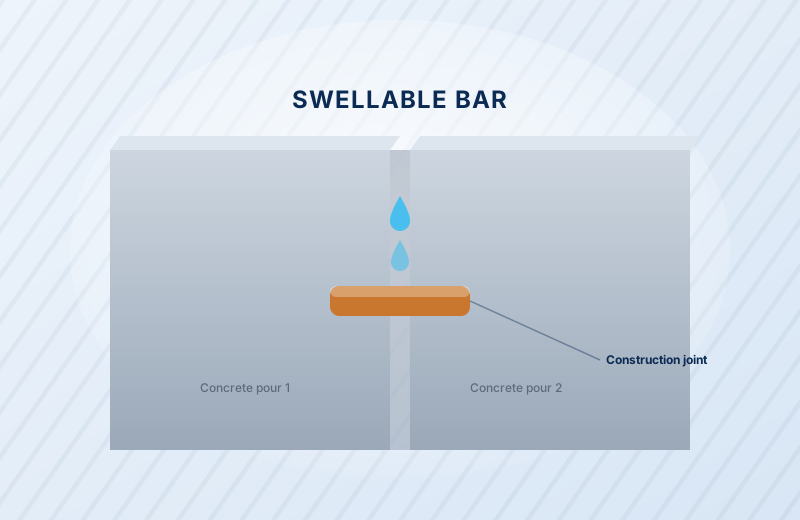
Hydrophilic rubber and bentonite swelling strips that seal cold joints, pipe penetrations and kickers against water ingress.
View Details →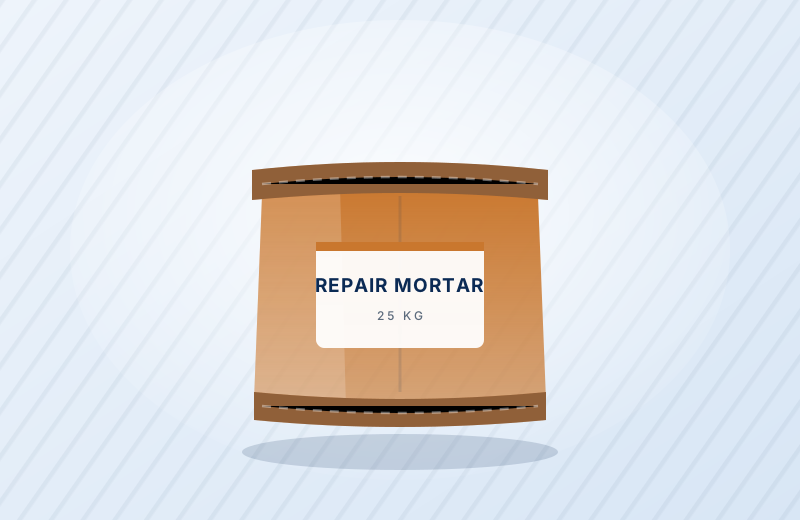
Polymer-modified and micro-concrete repair mortars for spalled slabs, beams, columns and honeycombed concrete.
View Details →
Styrene butadiene rubber latex for bonding slurries, polymer-modified repair mortars, screeds and waterproof plaster.
View Details →Tell us the area, the structure and the problem. We will recommend the right system, quote it in writing and, if you want, apply it ourselves.