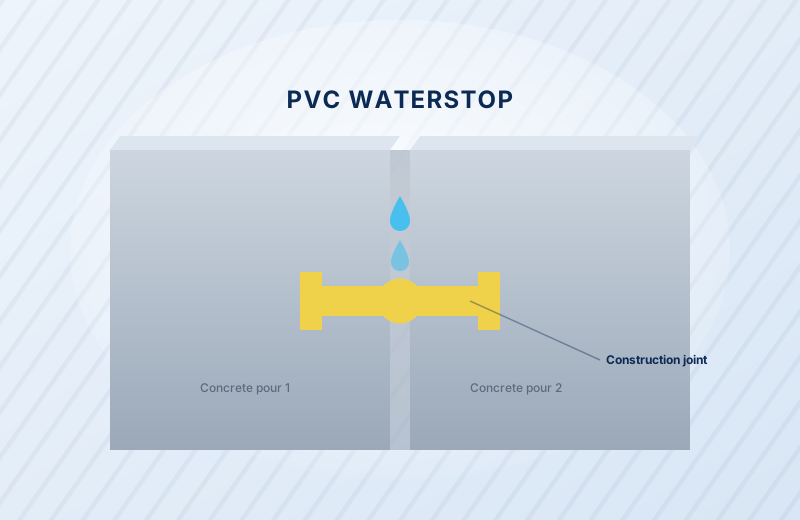
A waterstop is a physical barrier cast into the joint itself, forming a continuous diaphragm that water cannot get past. It is the specified solution wherever a joint has to both move and stay watertight: expansion joints in tanks, reservoirs, canals and deep basements.
The centre bulb accommodates movement between the two concrete sections while the ribbed wings lock into each pour. Getting the profile, the position and above all the site joining right is what determines whether it performs.
Supplied to contractors and builders, or supplied and applied by our own teams with a written warranty.
| Material | Plasticised PVC / natural rubber |
|---|---|
| Profiles | Centre bulb, dumbbell, ribbed, kicker and external types |
| Widths | 150 mm, 200 mm, 230 mm, 250 mm and 300 mm |
| Thickness | 3 mm to 10 mm depending on profile |
| Tensile strength | Typically greater than 12 MPa |
| Elongation at break | Typically greater than 300 % |
| Supply | Rolls of 15 m to 20 m; site welding kit available |
Typical values for guidance. Actual figures vary by grade and manufacturer. The data sheet for the exact product supplied on your project is provided with delivery.
Rolls of 15–20 m. Prefabricated corners, junctions and welding equipment available on request.
The sequence our teams follow, and the sequence we recommend to contractors buying the material from us.
Set the waterstop centrally in the joint with the bulb aligned exactly on the joint line.
Tie the wings to the reinforcement at close centres so it cannot fold over during the pour.
Butt-weld ends with a heated blade. Never overlap, and never tie with wire alone.
Vibrate concrete thoroughly under and around the wings; trapped voids under a waterstop defeat its purpose.
Keep the exposed half clean and undamaged until the second pour.
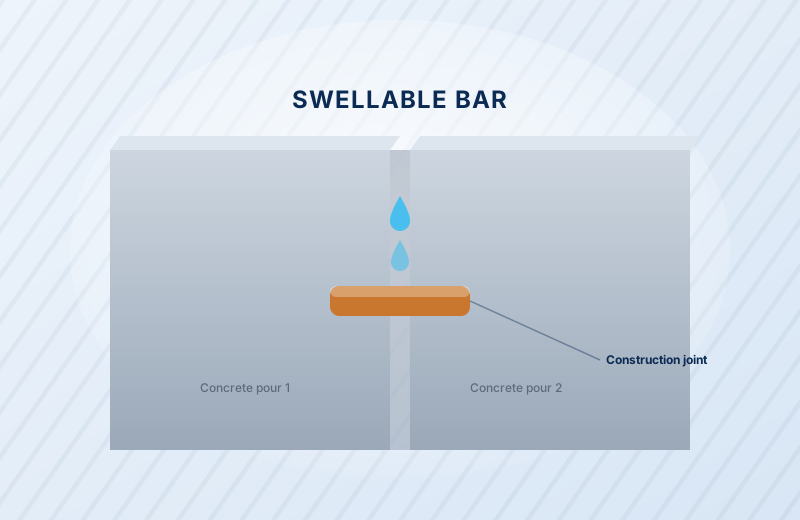
Hydrophilic rubber and bentonite swelling strips that seal cold joints, pipe penetrations and kickers against water ingress.
View Details →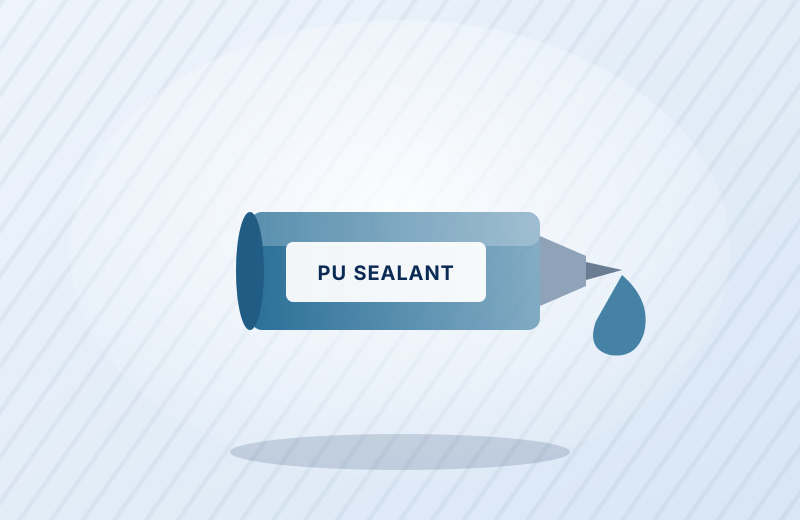
Polyurethane, silicone and polysulphide sealants for expansion joints, glazing, wet areas and structural movement gaps.
View Details →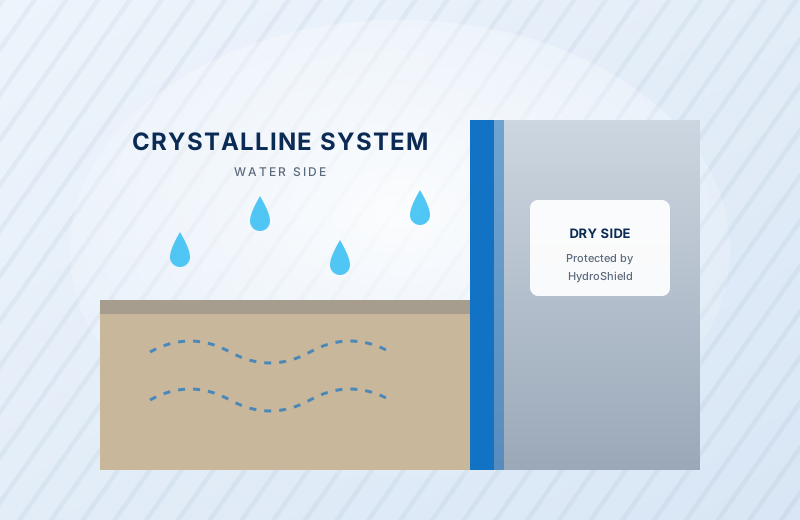
Capillary crystalline and acrylic-cementitious coatings for basements, water tanks, retaining walls and wet areas.
View Details →
HDPE, LDPE and PVC geomembrane liners for water ponds, canals, landfills, effluent lagoons and buried tanking.
View Details →Tell us the area, the structure and the problem. We will recommend the right system, quote it in writing and, if you want, apply it ourselves.